
Gift Bundles vs. Single Items: What Buyers Prefer in 2026
In 2026, curated gift bundles often beat single items by reducing decision fatigue and boosting perceived value—here’s when each option wins.
Why bundles are winning in 2026 (and what that says about buyers)
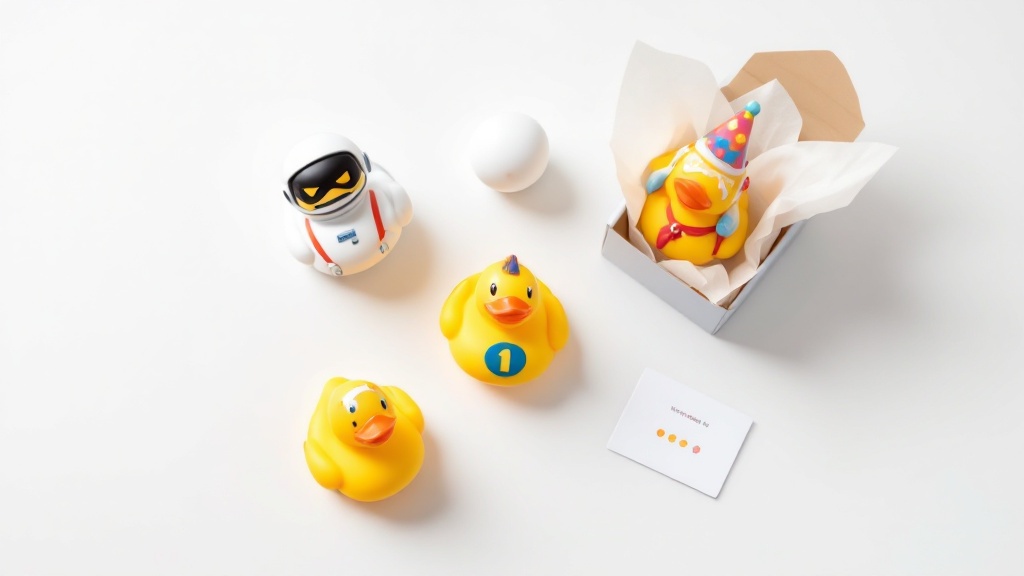
In 2026, gifting decisions are happening faster and closer to the event—yet expectations feel higher. That tension is driving a clear shift in consumer-trends: more shoppers prefer curated sets over one-off items because bundles reduce browsing time and remove doubt. In d2c-ecommerce, where customers can compare dozens of options in minutes, the “too many choices” problem is real—and buyers reward brands that simplify the decision.
The psychology is straightforward buyer-psychology: bundles create a ready-made story (“I thought of everything”), while also increasing perceived value through cohesion (matching theme, colors, packaging) rather than raw item count. A three-duck “Birthday Splash Set” can feel more premium than a single duck—even if the price difference is small—because the buyer sees completeness.
For collectible-friendly products like themed rubber ducks, bundling also lowers the risk of picking “the wrong one.” A curated assortment gives the recipient variety, and it gives the buyer confidence that the gift will land well.
When bundles beat single items—and when singles still win
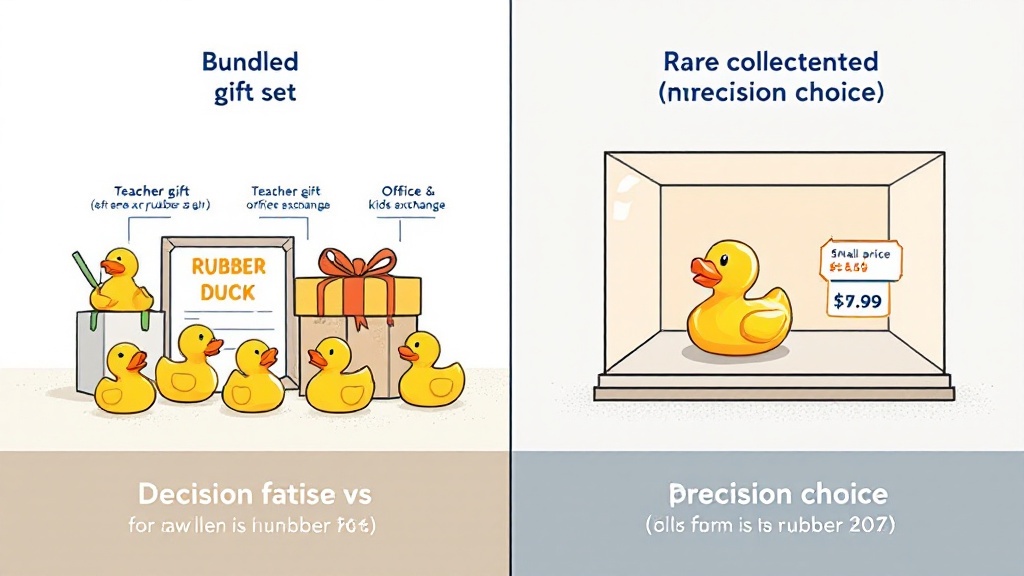
Bundles tend to outperform single items when the occasion is repetitive, social, or time-compressed. Think teacher gifts, office exchanges, kids’ parties, team celebrations, and “I need something cute by Friday” moments. In these scenarios, bundling reduces decision fatigue, makes budgeting predictable, and improves presentation without extra effort. For event planners, bundles also streamline logistics: fewer separate decisions, fewer “does this match?” worries, and a clearer path to reordering.
Single items still win when the gift is highly personal, symbolic, or collector-driven. A collector may prefer one specific limited theme duck over a multi-pack, and a parent may want “the exact duck” their child picked out. Singles also make sense when shipping costs matter, when you’re filling a small stocking, or when you want an add-on to a main present.
A practical rule from buyer-psychology: if the buyer is trying to avoid regret, they’ll prefer a bundle; if they’re trying to express precision, they’ll prefer a single. Smart d2c-ecommerce shops support both paths with fast filters and clear bundle comparisons.
How to choose (budget, presentation, and a fast path to checkout)

To choose between bundles and singles in 2026, start with budget and audience size. For one recipient, a small bundle often feels “more gift” at a modest price because it looks complete and deliberate—an advantage reinforced by current consumer-trends toward curated, ready-to-give packaging. For groups (classrooms, offices, parties), set a per-person cap, then pick bundles that keep themes consistent; consistency reads as quality even when costs are controlled.
Presentation is the multiplier. Bundles benefit from one-click upgrades: a gift note, a themed insert, or a simple accessory that ties everything together. Singles benefit from specificity: highlight the exact theme (“Sports + Yellow”), rarity, or personalization. Either way, clarity beats complexity—buyers prefer transparent comparisons (what’s included, what it costs, when it arrives).
This is where QuirkyDuck Emporium’s model fits the commercial-investigation shopper: fast theme-based browsing, pre-made gifting sets, and tiered bulk pricing with light customization (like logo stickers). That combination makes gifting simpler, bundling more compelling, and repeat orders predictable—without adding operational friction.